Homes in Swansea
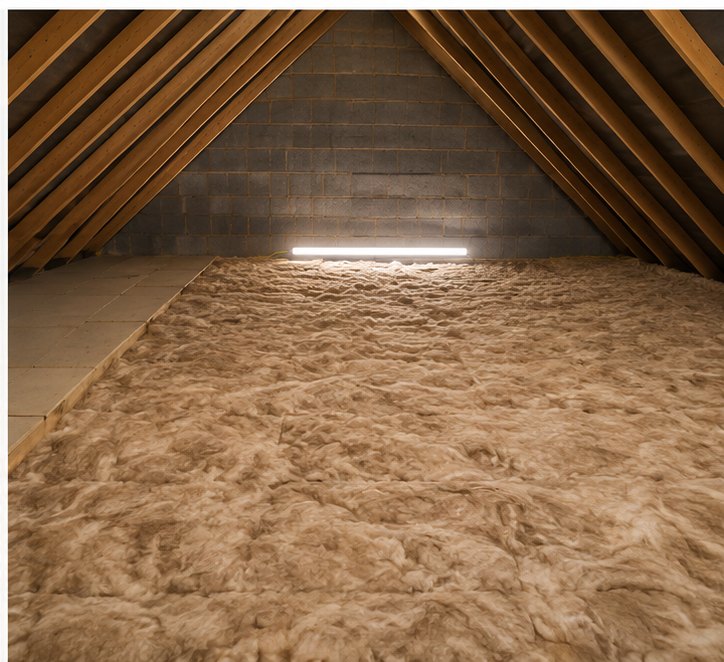
The tightly packed terraces of Uplands and Brynmill often have compact, steeply pitched lofts with difficult access and insulation that has settled over many years. Much of Swansea's stock is interwar and post-war semi-detached housing across Sketty, Morriston and Townhill, typically carrying thin original wool that suits a top-up, frequently with storage boards laid straight onto the joists. Exposed hillside and estate properties take the full force of Atlantic weather, so airflow and moisture matter here as much as depth of insulation. Marina apartments raise their own questions about who is responsible for the roof space.
Local considerations
Swansea is one of the wetter, windier cities in Britain, sitting open to the Atlantic, so ventilation and driving rain are real considerations. Packing insulation hard into the eaves of an exposed terrace can block airflow and trap moisture, so we keep the eaves clear and treat ventilation and insulation as one question. On the most weather-beaten roofs we also check how the covering and felt are coping before recommending a build-up.
Ventilation and moisture
High rainfall and salt-laden coastal air make condensation and damp complaints common in poorly ventilated Swansea lofts. Insulation alone will not cure a moisture problem, so we identify the actual cause — airflow, wind-driven rain, a leak or an extractor venting into the loft — before recommending work.
What affects cost in Swansea
In Swansea, cost is driven mainly by hillside access, whether old insulation needs removing, the exposure of the roof, and any boarding or ventilation work. Parking on the steep terraced streets can also be a factor.