
Case study
Loft Mould Treatment in Bristol
Loft mould treatment in a 1930s semi-detached home
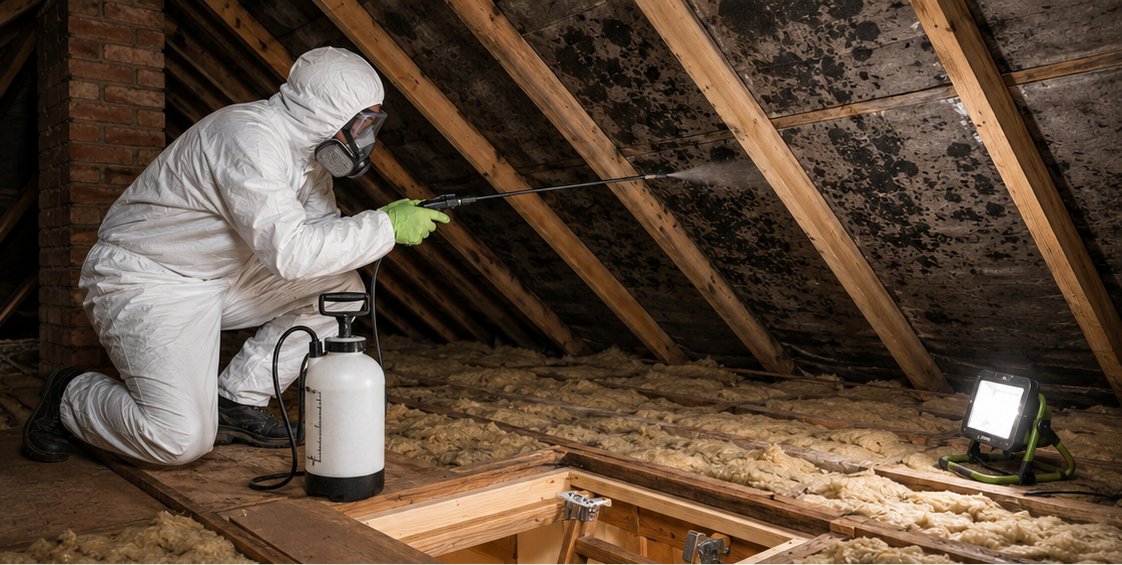
What we found
- •Widespread black mould on roof lining and rafters
- •Condensation staining around the eaves
- •Insufficient ventilation
- •Old, dusty insulation with reduced performance
- •No signs of active roof leaks
The problem
The homeowner noticed a musty odour and black spots on the loft boarding. The mould was caused by condensation due to poor ventilation and cold roof surfaces. Left untreated, it could damage timbers, reduce insulation effectiveness and impact indoor air quality.
Our assessment
We carried out a full inspection of the loft, measuring temperature and humidity levels. The roof void was found to be under-ventilated with high relative humidity. Mould growth was active but superficial, and the timbers were in good condition.
The treatment
We applied a professional biocide solution to all affected roof lining and timber surfaces using low-pressure spray equipment. This kills mould at the source and helps prevent regrowth. We also treated surrounding areas prone to condensation.
The result
The visible mould was eliminated and surfaces were sanitised. The loft now smells fresh and clean, with a noticeably improved environment. Timbers remain sound and protected.
The treatment helped to
- Eliminate existing mould and spores
- Improve indoor air quality
- Protect timber and insulation
- Reduce the risk of future regrowth
- Support a healthier home environment
Free, no obligation
Ready to arrange a free loft assessment?
Tell us about your property and we will review your loft requirements, then provide a written recommendation and quotation before any work begins.