Homes in Coventry
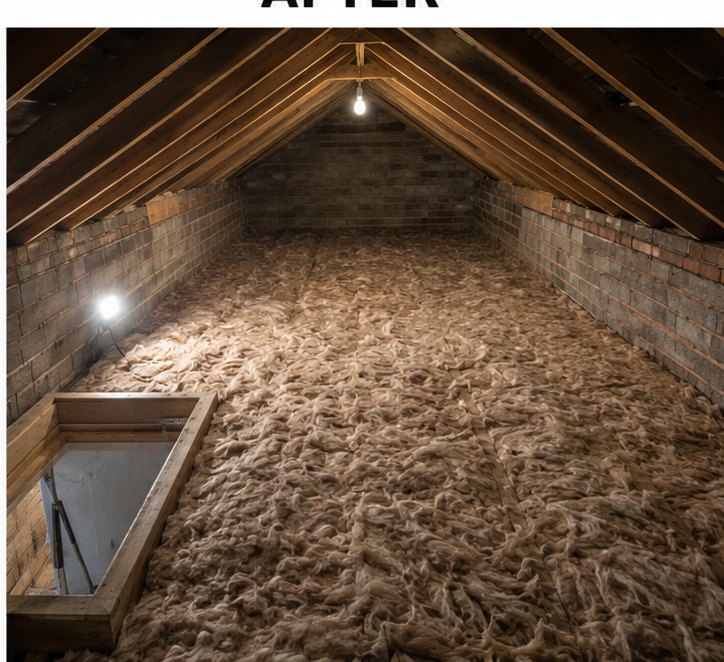
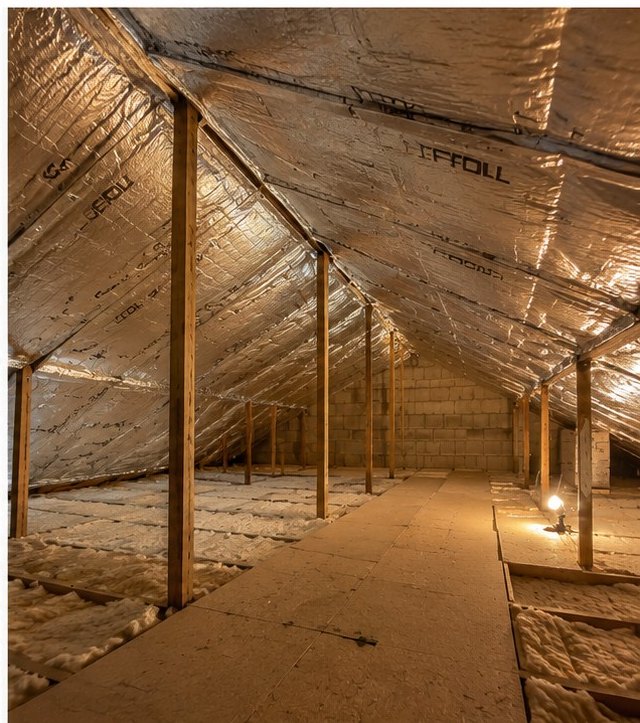
The city's surviving terraces around Earlsdon and Radford have compact, steeply pitched lofts with limited headroom and often settled, ageing insulation. Coventry's extensive post-war and interwar semi stock — Tile Hill, Canley, Wyken and beyond — typically carries thin original wool that lends itself to a top-up, frequently with storage boards laid straight onto the joists. Later system-built and estate housing can have shallow roof voids or flat and mono-pitched sections that need a tailored approach rather than a standard blanket.
Local considerations
Because so much of Coventry's stock is post-war, many lofts already have insulation of varying age and quality, and the sensible step is often a top-up plus better boarding rather than a full replacement. In older terraces we keep the eaves clear so airflow is not blocked, and across all ages we check that bathroom and kitchen extractors vent outside rather than into the loft, which is a common cause of condensation.
Ventilation and moisture
Condensation and damp staining are common in poorly ventilated Coventry lofts, especially where an extractor fan discharges into the roof space. Insulation alone will not fix a moisture problem, so we look for the real cause — airflow, a leak or a misrouted fan — before recommending any build-up.
What affects cost in Coventry
In Coventry, cost depends mainly on loft access, whether existing insulation needs topping up or removing, and any boarding or ventilation work. The age and layout of post-war roofs can also affect how straightforward a job is.